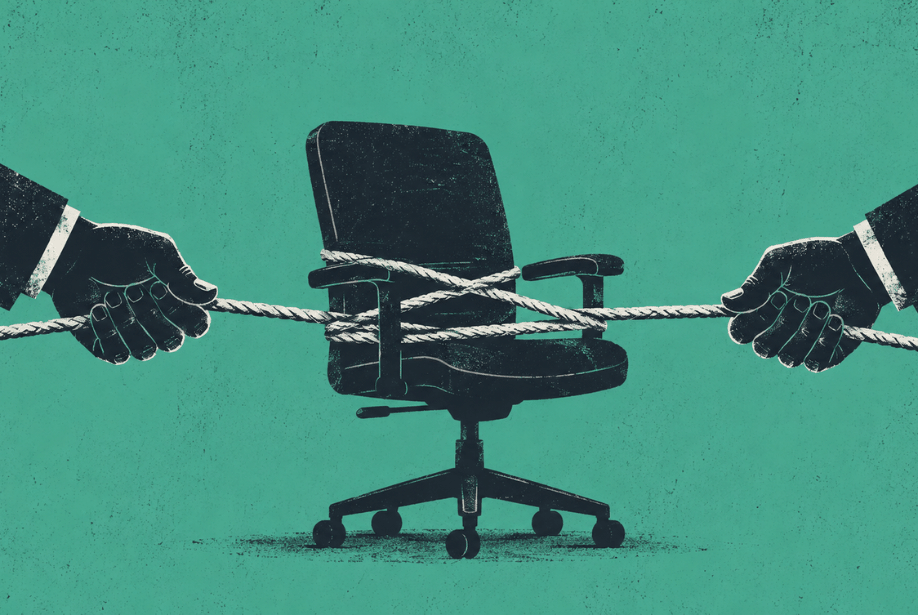

The customer success org chart is having a fight again, and this time there is money on the table. In one year, the share of CS teams reporting to a CRO jumped from 24% to 33% (2024 Customer Success Leadership Study). Tie CS to revenue, make net revenue retention the number, and hand it to the person who already owns the quota.
The CS leaders I talk to keep circling the same worry. Do we lose the trusted-advisor role the second we report to the person holding the sales number?
I got tired of guessing, so I asked the people who run these structures for a living. George Storm, CRO at N.Rich, argued the revenue case from the seat where both sales and CS report to him. Kristi Faltorusso, a former Chief Customer Officer, made the case for protecting the customer outcome. Morika Georgieva, who built enterprise CS and a paid CS offering at Workiva, brought the operator's view.
Above is a recording from the panel I hosted on where customer success should report in 2026: the CCO or the CRO. Below are my takeaways on what the debate settled, and what it means for how you hold your ground.
TL;DR
- The fight over CCO versus CRO is the wrong first question to ask. Ask why the company is moving CS and what it wants the function to drive.
- Reporting to a CRO does not, on its own, put your customer outcomes at risk. The leader in the seat decides that, so learn who they are before you panic.
- Customer success gets cut when it cannot tie its work to revenue. AI is now automating the work that was never connected to a number.
- CS became the company dumping ground by saying yes to everything. Boundaries and a real strategy fix that, not a new box on the chart.
- The 2026 move is from defending your reporting line to owning the outcome. Whoever owns the growth number owns the functions around it.
1. The reporting line is the wrong place to start the argument
We spent the whole session poking at a question, and the panel kept handing it back to me sideways.
Morika has reported to a CCO, a CRO, and a Chief Operations Officer over her career. Her point landed early. The reporting line is not what changes your work. The reason behind the move is. If a company shifts CS from one leader to another, it wanted something. Own more expansion. Protect an outcome. Fix a handoff. Start there, and the box on the chart becomes a detail.
Kristi said the same thing from a different angle. Across CROs, CCOs, and even a Chief Product Officer, her actual work barely moved. Product complexity, the market, and who her customers were shaped that. What changed was how she reported up and out. Under a CRO, everything got framed as revenue. Under a CCO, it got framed as customer experience feeding revenue.
Before you argue about the box, ask the better question. Why is the company moving CS at all, and what does it want you to drive once you land?
That reframe takes the fear out of the conversation. You stop treating the org chart as a verdict on your worth and start treating it as a signal of intent. When the CEO moves you under revenue, that is a message about what the business needs next. Read the message. Then decide whether you have the mandate and the people to deliver it.
2. Your trusted-advisor role lives or dies with the leader above you
The moment CS reports to a CRO, the story goes, the customer outcome dies and we all turn into quota-carrying closers. I hear that fear constantly.
Kristi does not buy it. The outcome is not under threat because of a reporting line. It is under threat when the wrong person sits in the seat. She has worked for CROs who understood that value drives revenue and gave her room to lead. She has also worked for CROs who saw CS as a number to squeeze, and she left those roles. The structure was identical. The leader was not.
George took it further, and he holds the CRO seat. A CRO who does not understand what CS brings is not really a CRO. That is a head of sales with a bigger title. Reframe the fear that way and it collapses. Should CS report to a head of sales? No. Should CS report to someone who owns the whole growth number and knows that retention and expansion are cheaper and more predictable than net new? That is a different question with a much easier answer.
There is a warning buried in that optimism, though. Kristi named a pattern I see every day. Customer success is scared of everything. Scared for jobs, scared about scope, scared of the next reorg. That fear feeds the doom content on LinkedIn, and it talks good teams into panic they have not earned.
Do the unglamorous work before you worry. When a new CRO shows up, learn their background. Have they run or valued a CS function before? Do they talk about gross and net retention, or only new logos? A short conversation tells you whether you are walking into partnership or a squeeze. Fear the specific person if the evidence says so. Do not fear the title on reflex.
3. Customer success gets cut when it can't connect its work to revenue
This is the part of the debate that stopped being about org charts and started being about survival.
Kristi has spent years inside a CS platform company, talking to hundreds of these leaders. What she watched was not consolidation. It was disbandment. Teams disappeared because they lived in a world of work nobody could measure. When you cannot attribute what a team does to a number, someone eventually decides it does not need to exist.
She told a story that stuck with me. She sat in a room where a CEO could not explain how the CS team's daily work touched revenue. Then the CS leader could not explain it either. She had processes, tools, and systems, but no proof any of it moved the business. As Kristi put it, at that point you have docs and SOPs, not a team modeled after anything.
Layer AI on top of that. The work that was never tied to revenue is exactly the work getting automated first. The teams that could not draw the line are now watching it get even longer.
Can your team draw a straight path from what it does on a Tuesday to a number on the board? If you cannot, the org chart is not your problem yet. The missing line to revenue is.
Kristi said something I keep repeating. The people in that room, the ones who get this, are the minority, not the majority. Most Series A, B, and C companies have not built the machine. That is uncomfortable, and it is also the opportunity. Attribution is still rare enough that doing it well makes your team hard to cut.
4. Customer success became the company dumping ground by saying yes to everything
George called CS the middle child of the company, and the room laughed because it is true. Post-sale sanity, renewals, satisfaction, referrals, review sites. Anything without a clear owner gets handed to success. Then leadership turns around and says it is not sure what CS actually does.
Morika refused to let CS off the hook, and I appreciated her for it. We take the accountability too. All of this piles onto CS because we keep saying yes. Ask a sales rep to cover support tickets for a week, and the room laughs at the idea. Ask CS the same thing, and we say, of course, whatever the customer needs. That reflex feels generous. It is also how you end up owning fifteen things you cannot measure.
George shared the cleanest fix I heard all session. When he took over, the sales-to-success handoffs were a mess, with missing information and inflated promises. He built an accept or decline trigger. If the handoff came in half-baked, CS could decline it, and the account stayed with sales. Suddenly the quality of the handoff was sales's problem too.
That is what a boundary looks like in practice. It is a rule that says here is what we accept, here is what we send back, and here is why. You will not fix the dumping-ground habit with a better attitude. You fix it by deciding what CS owns, tying those things to the retention and expansion numbers you are measured on, and declining the rest with a reason.
One honest caveat from George. In a market this shaky, telling a CS leader to just set boundaries ignores how little power some of them have. This is not only on you. Leadership has to back the boundary, or it stays a nice idea that gets overruled.
5. Copy another company's org chart and you inherit problems that aren't yours
The whole panel agreed on one thing. Stop copying the trend.
Kristi has run CS at five companies. At some she owned every dollar after the first sale. At others she owned nothing past renewal. Every structure was different, and every one worked, because each fit that specific business. She will not join a company that says the VC wants everyone rolled up under the CRO, so that is what we are doing. If the leaders in the seats cannot argue for what their business actually needs, she does not want to be there.
Morika gave me the line I will keep using. Org structure is not a solution. It is a reflection of your strategy. Figure out the strategy first, and the chart mostly draws itself.
She also pushed back on the assumption underneath the whole debate, that bigger companies simply need more chiefs. At Workiva, hitting a billion in revenue this year, she does not see size as the driver. Complexity is. Long enterprise cycles, land-and-expand deals that grow from a couple hundred thousand into millions, partner networks, multi-threading through huge accounts. That complexity is what justifies more roles, not the headcount.
The real question is not whether you copy HubSpot or the latest trend report. It is what your sales cycle requires you to execute, and who owns each piece of it.
Will more teams keep rolling up under the CRO in 2026? Probably. Kristi said as much, and then said plainly that she does not support following it for its own sake. A trend tells you what other companies chose under their pressures. It tells you nothing about yours. Design for your business, or you will spend next year unwinding a structure you copied from someone whose problems were never yours.
6. The real 2026 shift is from defending your seat to owning the outcome
George closed with the idea I have not stopped thinking about, and it reframes the entire debate.
He does not read LinkedIn to set strategy. He watches how AI-native companies get built. They do not organize around who owns each function, the way we always have with sales here, marketing there, CS somewhere below. They organize around who owns the outcome. Whoever owns the bottom-line growth number owns the functions that feed it, because they need those inputs to report the number at all. Under George, that means product support and marketing sit inside revenue alongside CS, so the growth number reflects everything that shapes it.
That is the shift I want CS leaders to feel. For years we have argued about which executive we sit under, as if the box protects us. It does not. Ownership does.
Morika and George both see the same wave coming. Wall Street already punished the SaaS names that grew without profit, and that pressure is heading for the well-funded AI companies next. Nobody escapes the question of what your work returns. Role consolidation follows, and the layers that cannot explain their value get compressed.
You can read that as a threat, or you can read it the way I do. This is customer success finally being asked to play the game it always claimed it could. Own retention. Own expansion. Prove the number. Stop guarding a seat and start owning a result.
The teams that make that move will not be arguing about the org chart in 2026. They will be the reason the org chart looks the way it does. That is the version of CS I am rooting for, and after this panel, I am more convinced than ever it is within reach.
.png)